
By Emily Sok, Published January 25, 2024
An Interview with Tanya Boucicaut
Collaborate with Tanya: tboucica@gmu.edu
View Tanya’s Website: https://www.tanyaboucicaut.com/about
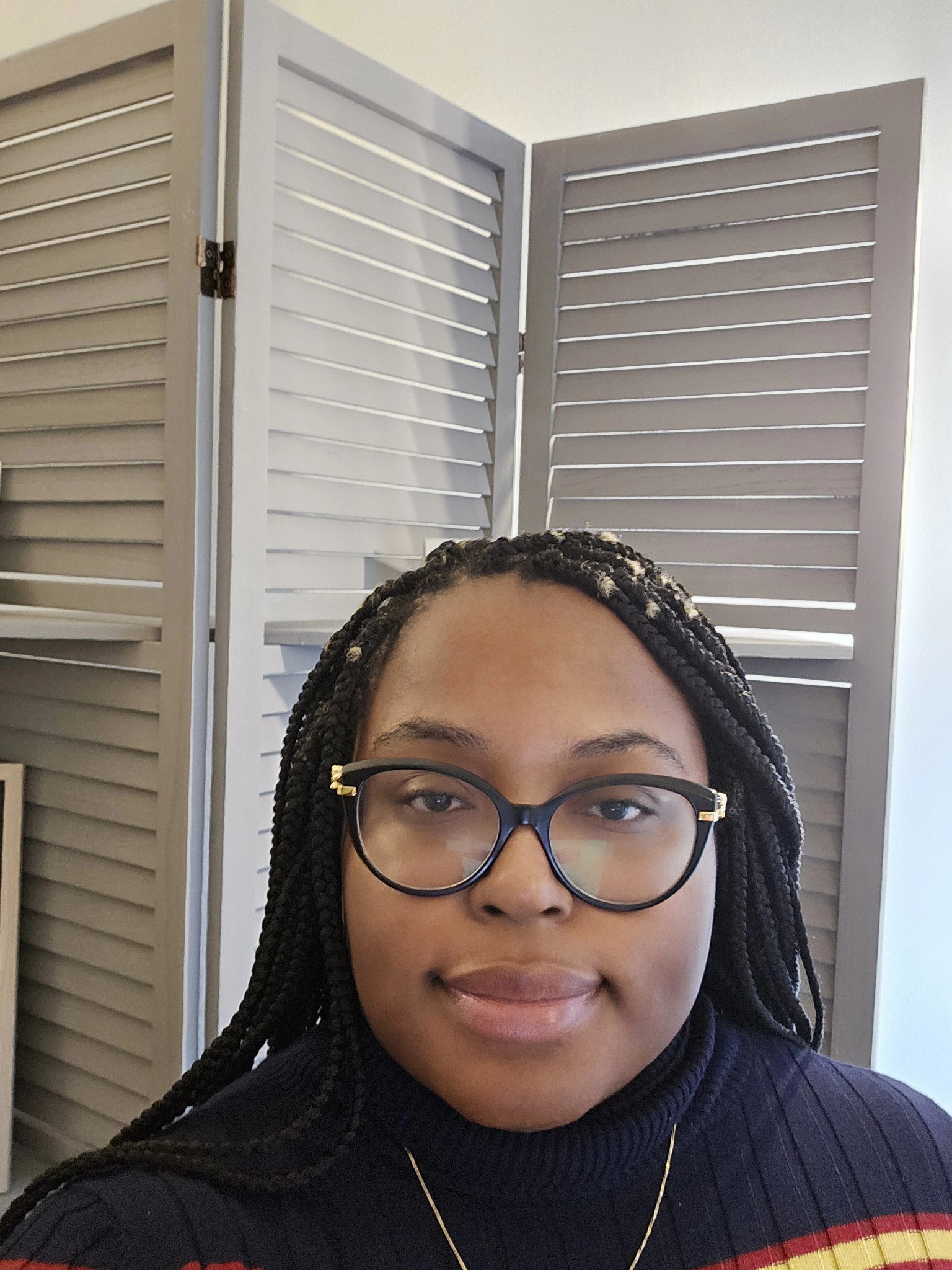
As of my interview with Tanya Boucicaut in December, 2023, Tanya is a Writing and Rhetoric doctoral candidate at George Mason University who recently transitioned to the west coast. Her work is inspiring for graduate students, community and public writers, and for anyone interested in community engaged and creative works!
Why do you believe community and public writing are important?
In thinking about community, we’re thinking about it on a broader perspective, as in, not just from our local community, although that is one type of community writing. In terms of audience, that is where you would use in-group language. That is where you wouldn’t necessarily have to explain the different metaphors that you might use in an in-group setting. That’s a type of community writing, but I think this question really refers to a larger public, one that is made up of varying perspectives. I believe it’s important because if we are in partnership with people, if we are in community with others who are not like ourselves, then we are able to have a richer perspective. We’re able not only to write from a fuller experience, but we’re also able to include voices that may be – that are often – silenced for various hegemonic reasons.
And so in many ways, we are translators. It’s important not in the sense of speaking for the voiceless, but in the sense of being in conversation. So it’s important for us to get out those marginalized voices, especially someone like me, being a Black Haitian woman, having varied, marginalized identities, to be in this space to be able to speak with my people. It’s very important particularly for this larger public audience, to dismantle stereotypes and to shake up archetypes.
Can you tell us about your professional and your academic background?
I have been in higher ed for over a decade. I was an assistant writing professor at a large research institution, and prior to that, I have been a professional student. That’s something that I like to promote, and it actually works well with students. I’ve been in college since I was 18. I am 36 now, so that means I’ve been in college for 18 years. I’ve kind of mastered the concept of what it means to be a student.
I created and ran a nonprofit theatre for Black youth in Richmond when I was working on my second master’s degree, where we rewrote fairy tales. Those young people are doing phenomenal. I helped create a graduate writing center and writing program for my alma mater for my first master’s, for graduate theological students. Currently, I am an editor for a nonprofit.
Are there any experiences with community or public writing that is like specific experiences that you might want to highlight?
I am a Ted Ed educator, which is the one experience I’m most proud of. It is both my magnum opus and holy grail at this point in my career. I published a TED Ed lesson on Zora Neale Hurston’s Their Eyes Were Watching God. That, to me, is the height of public writing. This lesson went through many drafts for it to be received by a wider audience. I had to make sure the language was very clear and precise. For this medium, we don’t have the luxury to assume that the person watching is going to get all the nuances, and I wanted to ensure there was integrity to the Black experience. I’ve also written plays, which is a different type of community writing. That leans more toward artistic work. I’ve written articles before, as well.
Collaborate with Tanya!
Get in touch with Tanya by emailing: tboucica@gmu.edu
In the context of community and public writing, if there were something you wanted to collaborate or develop a partnership around, what might that be?
Long-term, my goal is to take my dissertation work, and extend it through a documentary project in Virginia Beach. My doctoral project focuses on a incident involving racial violence during the 1989 Greek Fest against Black college students. And so for me, a partnership I plan to pursue, after I finished my dissertation, is to be able to canonize that event through a documentary. My goal is to partner with those who are in entertainment to tell the story of my community, to a broad audience.
Key Terms:
- nonprofit theater
- writing center
- TedEd
- Zora Neale Hurston
- Richmond
- podcast
- Greek Fest
- racial violence
Resources:
- Tanya’s TedEd Lesson – https://youtu.be/SPWpUwUGNk0?feature=shared
- Tanya’s podcast – https://www.booceteaches.com/podcast
- Tanya’s YouTube channel – https://www.youtube.com/@booceteaches
 The Virginia Community Writing Collaborative